

Testosteronology Society® Releases New Diabetes Guidelines for Testosterone and Androgen Care
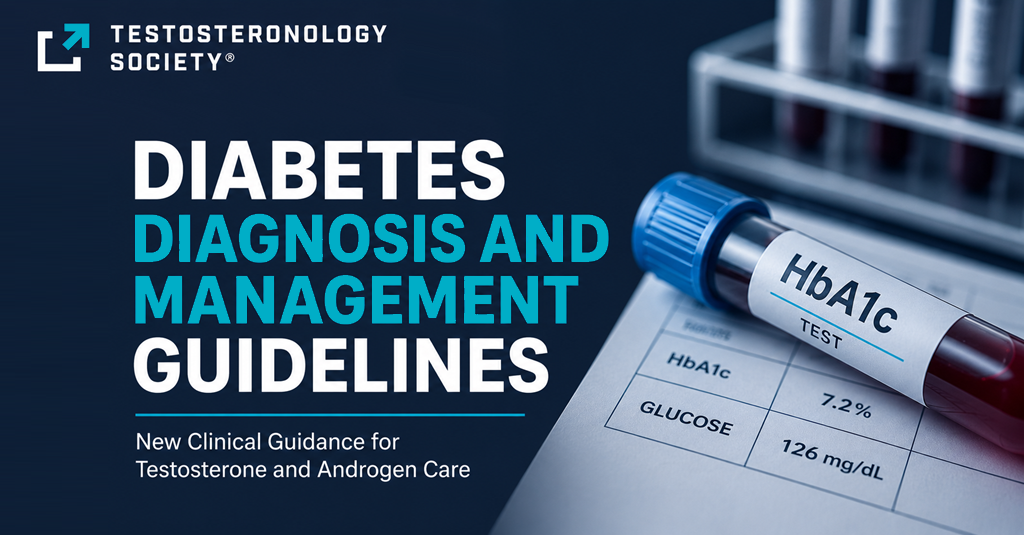
New Clinical Guidance for Testosterone Care

Testosteronology Society®

Thomas O’Connor, M.D.
New member-exclusive clinical guidelines advance the Society’s work to improve diabetes and metabolic care for patients receiving testosterone and androgens.
The Testosteronology Society® has released new Diabetes Diagnosis and Management Guidelines designed to help healthcare professionals more effectively evaluate and manage diabetes, prediabetes, insulin resistance, and related metabolic risks in patients receiving testosterone or other androgen therapies.
The publication represents another significant step in the Society’s work to advance the medical specialty of Testosteronology® and provide clinicians with the education, clinical frameworks, and practical resources needed to deliver a higher standard of patient care.
The new guidelines provide a clinician-focused framework for HbA1C interpretation, glycemic monitoring, diabetes-related risk assessment, diagnostic testing, and treatment considerations. The resource also examines how metabolic health intersects with testosterone and androgen therapy, helping clinicians look beyond hormone levels and evaluate the broader factors that may influence treatment response and long-term outcomes.
“Testosterone care cannot be separated from the patient’s metabolic, cardiovascular, renal, and overall health,” said Thomas O’Connor, M.D., Founder and CEO of the Testosteronology Society®. “These guidelines reflect the multidisciplinary work our Society is doing to give clinicians deeper knowledge and more practical tools for caring for complex patients.”
Addressing an Important Area of Testosterone Care
Many patients receiving testosterone or other androgens also present with obesity, insulin resistance, prediabetes, diabetes, cardiovascular risk factors, kidney disease, sleep disorders, and other metabolic conditions.
The Society developed the guidelines to help clinicians recognize and evaluate these interconnected issues rather than treating testosterone levels and metabolic health as separate areas of care.
Topics addressed in the new clinical resource include:
• HbA1C and blood glucose interpretation
• Prediabetes and type 2 diabetes
• Type 1 diabetes and Latent Autoimmune Diabetes in Adults
• Insulin resistance, fasting insulin, and C-peptide testing
• Male Obesity-Associated Secondary Hypogonadism
• Hypercortisolism and severe metabolic dysfunction
• Medications that may contribute to hyperglycemia
• Recommended laboratory testing and ongoing monitoring
• Nutrition, physical activity, sleep, and behavioral support
• Diabetes medications and treatment considerations
• Cardiovascular, kidney, and metabolic risk management
The guidance incorporates current diabetes recommendations while focusing specifically on their application to patients receiving testosterone and other androgen therapies.
Developed Through Multidisciplinary Collaboration
The Diabetes Diagnosis and Management Guidelines were authored by:
• Thomas O’Connor, M.D.
• Colette Nelson, FNP-C, RD, RN, CDCES, MSCP, AAFE
• Jason Bennett, APRN, PMHNP-BC
• Omar Hajmousa, PharmD
The guidelines were also reviewed by members of the Testosteronology Society® clinical review team.
This collaborative process reflects one of the central strengths of the Testosteronology Society®: bringing together clinicians from multiple healthcare disciplines to examine complex issues that affect patients receiving testosterone, androgens, and other hormone therapies.
Rather than reducing testosterone care to prescribing medication and monitoring a hormone level, the Society promotes a more comprehensive approach that considers the full patient, including symptoms, laboratory findings, medications, metabolic health, cardiovascular risk, kidney function, mental health, sexual health, and long-term safety.
Building the Clinical Foundation of Testosteronology®
The release of these guidelines is part of the Society’s broader effort to establish deeper educational and clinical foundations for Testosteronology®.
Through its growing library of clinical guidelines, professional courses, multidisciplinary collaboration, live Grand Rounds, and continuing education, the Society is helping clinicians develop the knowledge needed to manage increasingly complex patient presentations.
The Diabetes Diagnosis and Management Guidelines are available exclusively to Testosteronology Society® members through the Society’s Guidelines & Resources library.
Members also receive full access to the Testosteronology Professional Education Program, which provides structured education on testosterone therapy, androgen health, laboratory interpretation, metabolic health, cardiovascular considerations, sexual health, women’s hormone care, anabolic steroids, and other systems that may influence treatment outcomes.
Healthcare professionals who want to strengthen their clinical knowledge and help deliver the highest standard of care to patients receiving testosterone and androgen therapies are invited to join the Testosteronology Society®.
Learn more about the new guidelines:
https://testosteronologysociety.com/news/testosteronology-society-releases-new-diabetes-diagnosis-and-management-guidelines
Learn more about Society membership and the Testosteronology Professional Education Program:
https://testosteronologysociety.com/
About the Testosteronology Society®
The Testosteronology Society® is a multidisciplinary consortium of healthcare professionals dedicated to advancing the highest standard of care for people receiving testosterone, androgens, and other hormone therapies. Through professional education, clinical resources, multidisciplinary collaboration, live Grand Rounds, and the continuing development of Testosteronology®, the Society helps clinicians strengthen their knowledge, clinical reasoning, and readiness to care for complex patients.
Steven Sunshine
Testosteronology LLC
+1 561-441-3642
email us here
Visit us on social media:
LinkedIn
Instagram
Facebook
YouTube
TikTok
X
Legal Disclaimer:
EIN Presswire provides this news content "as is" without warranty of any kind. We do not accept any responsibility or liability for the accuracy, content, images, videos, licenses, completeness, legality, or reliability of the information contained in this article. If you have any complaints or copyright issues related to this article, kindly contact the author above.
